
Most retail buyers believe wealth in property is created by chasing rental yields in fully built-out neighborhoods.
They purchase apartments in saturated secondary nodes, battle high service charges, absorb routine tenant turnover, and watch currency depreciation steadily compress their dollar returns.
Institutional players and legacy family offices operate under an entirely different thesis. They understand that rental yields maintain wealth, but land preserves and compounds it across generations.
However, simply acquiring bare dirt on the periphery of an urban boundary is not a strategy—it is speculative gambling. When executed correctly, strategic land banking is a deliberate, intelligence-driven exercise in structural patience, infrastructure anticipation, and risk mitigation.
The Flawed Logic of Retail Land Banking in Lagos
The most pervasive misconception among private investors and diaspora capital is treating the Lagos land market as a monolith. Investors often assume that because land in Lekki Phase 1 appreciated exponentially between 2001 and 2021, any contiguous corridor eastwards will automatically yield identical trajectories over the same time horizon.
This assumption ignores the realities of infrastructure sequencing, municipal zoning constraints, and demographic realities.
Over the last decade managing transactions across the state, we have consistently observed retail buyers committing two structural errors:
- The Inaccessible Speculation Trap: Acquiring uncommitted communal land three kilometers off arterial transit nodes simply because the price per square meter is superficially low, without verifying right-of-way planning or soil topography.
- Title Inattention: Relying on provisional allocations, unexcised parcels, or generic “gazette-in-view” claims that unravel when institutional infrastructure programs—such as arterial road dualizations or coastal developments—reclaim statutory corridors.
Generational wealth requires assets that can outlive administrative transitions and regulatory overhauls. If an asset cannot survive an institutional audit twenty years from today, it is not a banking strategy; it is an unhedged liability.
Understanding the Micro-Market Mechanics of Land Banking
To extract asymmetric upside from land banking, capital must be deployed ahead of confirmed infrastructure milestones, but behind regulatory clarity.
In Lagos, expansion follows logistics and industrial connectivity, not residential sentiment. The trajectory of the Lekki-Epe corridor illustrates this dynamic:
- The Saturated Consolidation Zone (Ikate to Sangotedo): Infill development dominates. Land here trades at dense retail pricing. Capital appreciation is capped relative to greenfield nodes, making this territory appropriate for cash-flow generation rather than primary accumulation.
- The Active Transition Corridor (Awoyaya to Eleko Junction): Institutional infrastructure—specifically expanded dual-carriageway access and arterial connections—has largely derisked the territory. Pricing per plot has crossed the threshold where institutional syndicates aggregate large acreage, leaving individual buyers to compete for subdivided parcels.
- The Long-Cycle Strategic Nodes (Epe, Ketu, and Alaro City Belt): This micro-market represents genuine generational deployment. The catalyst here is not domestic residential spillover, but industrial logistics, master-planned economic zones, deep-sea port supply chains, and proposed international cargo corridors.
┌────────────────────────────────────────────────────────┐
│     THE THREE TIERS OF THE URBAN EXPANSION ARC         │
├────────────────────────────────────────────────────────┤
│ 1. Consolidated Infill (Low multiple, high cash flow)  │
│ 2. Transition Nodes   (Medium multiple, intermediate)  │
│ 3. Strategic Outliers (Asymmetric generational upside) │
└────────────────────────────────────────────────────────┘
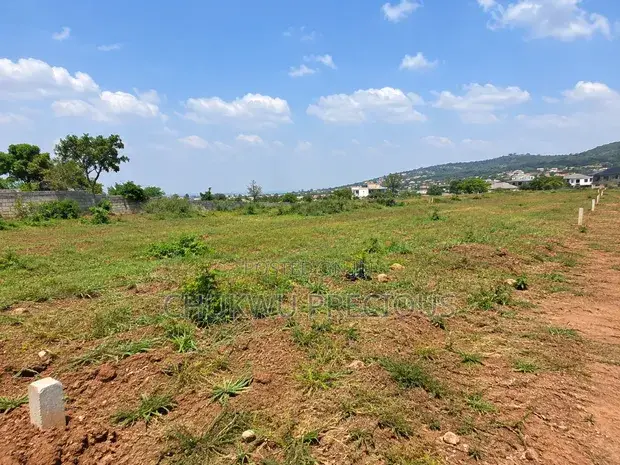
Consider an anonymized scenario from our advisory records: In 2017, a diaspora syndicate sought our counsel with intentions to allocate capital toward multiple two-bedroom off-plan apartments in an urban infill node. Our analysis demonstrated that anticipated net yields, post-maintenance and vacancies, would fail to outpace inflation. Instead, their capital was structured across five dry, verified hectares positioned directly along the arterial corridor connecting the agricultural logistics hub to the Epe export axis, acquired at agricultural bulk rates with verifiable titles.
By 2025, that positioning allowed the syndicate to execute a partial institutional exit to an industrial warehousing firm at more than seven times the initial capital expenditure, while preserving the remaining acreage intact for next-generation inheritance.
De-Risking the Asset: The Non-Negotiable Due Diligence Audit
Smart investors view legal title and physical verification as risk-pricing variables rather than routine administrative formalities. True generational capital evaluates land through three rigorous filters:
- Topographical Feasibility: Raw land that sits in low-lying, unmitigated wetland requires exorbitant reclamation and civil engineering expenditures before development can occur. What appears cheap on paper often carries prohibitive capital expenditure down the line.
- Statutory Cadastral Mapping: Confirming whether a parcel falls within an active government acquisition, agricultural reserve, or public infrastructure buffer requires charting coordinates at the state surveyor-general’s office—not relying on marketing brochures.
- Institutional Boundary Security: Land left unmonitored or unfenced invites physical counterclaims. Institutional banks ring-fence their positions immediately through physical perimeters, regular boundary inspections, and formal legal registrations.
Institutional Precision Over Speculative Haste
The difference between families that accumulate substantial property portfolios and those whose investments evaporate over two decades comes down to objective underwriting. Generational assets are acquired when market consensus is distracted, verified with unrelenting legal thoroughness, and held until private-sector capital necessitates your specific coordinate on the map.
Navigating this terrain requires an advisory partner that operates as an intelligence desk rather than a sales agency—one capable of separating high-conviction corridors from superficial marketing narratives before you commit capital.
We’re here to help with all your buying, renting, and property questions. Reach out anytime!
+234 701 497 6785
KM 48, Lekki-Epe Expressway, Sangotedo.
Nexorahomeslimited@gmail.com