
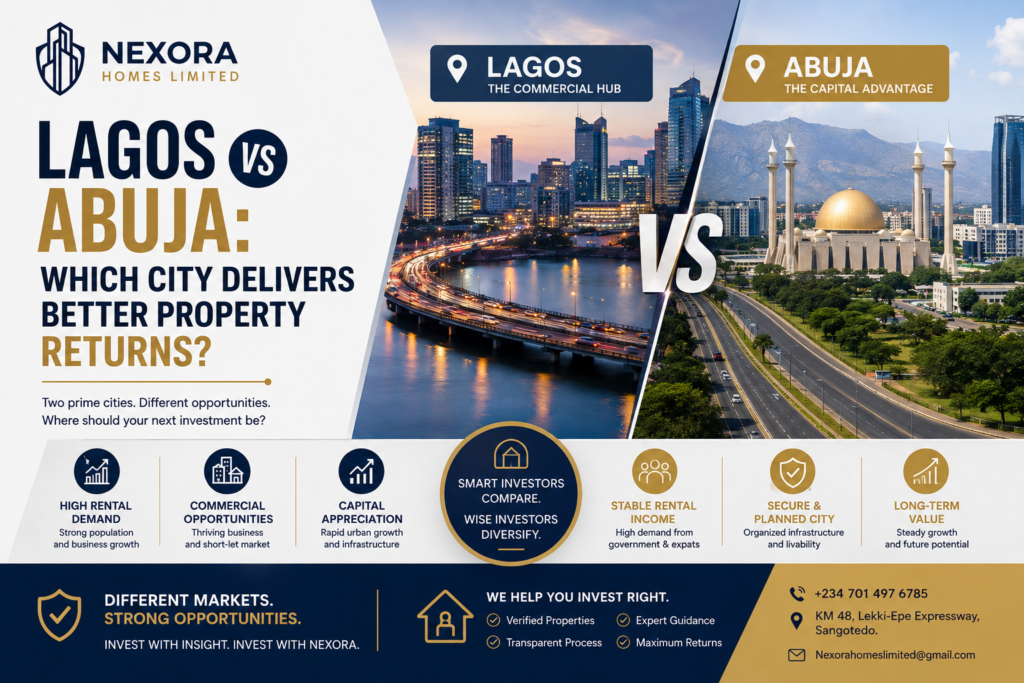
It is the classic debate among Diaspora investors and Nigerian HNWIs: Do I deploy my capital into the frenetic, high-growth engine of Lagos, or the structured, diplomatic stability of Abuja?
As a broker who manages portfolios across both cities, I can tell you that asking which city is “better” is the wrong question. The real question is: What is the specific job you want your capital to do?
In 2026, the data draws a stark contrast between the two markets. Here is how to position your investments based on your financial DNA.
Lagos: The Liquidity and Appreciation Engine
Lagos is aggressive. It is built for investors seeking rapid capital appreciation, high-velocity cash flow, and unparalleled market liquidity.
- Capital Growth: Driven by relentless population density and massive infrastructure plays (like the Deep Sea Port and the Coastal Highway), land in strategic growth corridors like Epe and Ibeju-Lekki is seeing historical 30–45% annual appreciation.
- The Short-Let Monopoly: Lagos utterly dominates the premium short-let and workcation market. A well-managed 2-bedroom unit in Lekki Phase 1 or Oniru can deliver 20–35% ROI, fueled by corporate expatriates, diaspora returnees, and a thriving entertainment sector.
- The Trade-off: High returns come with high volatility. Lagos requires exhaustive legal due diligence (the Omo-Onile factor) and higher property maintenance costs due to the coastal climate.
Abuja: The Capital of Predictable Stability
Abuja is defensive. It is the portfolio stabilizer, designed for investors who prioritize wealth preservation, lower risk, and premium, long-term tenant stability.
- Diplomatic and Institutional Yields: While Lagos thrives on daily hustle, Abuja thrives on institutional money. Neighborhoods like Maitama, Asokoro, and emerging mid-luxury hubs like Guzape and Wuye offer access to a tenant pool of diplomats, politicians, and NGO executives.
- Regulated Growth: Abuja’s master plan is strictly enforced. You rarely deal with the chaotic zoning changes or sudden government demolitions that plague Lagos. An off-plan investment in Guzape delivers a highly predictable 20–28% ROI over its lifecycle.
- The Trade-off: Liquidity is slower. Reselling a ₦300 million mansion in Asokoro can take significantly longer than selling an equivalent asset in Victoria Island.
The Verdict: Build a hybrid portfolio. Allocate 60% of your capital to Lagos for aggressive growth and cash flow, and 40% to Abuja for institutional stability and wealth preservation. Let Nexora Homes build that bridge for you.