
Historically, the golden rule of Nigerian real estate was: Never buy what you have not physically stood on.
For the Diaspora investor, this meant pausing their investment journey until they could book a December flight to Lagos. By the time they arrived, the prime units in the best estates were already sold out, and land prices had jumped by 20%.
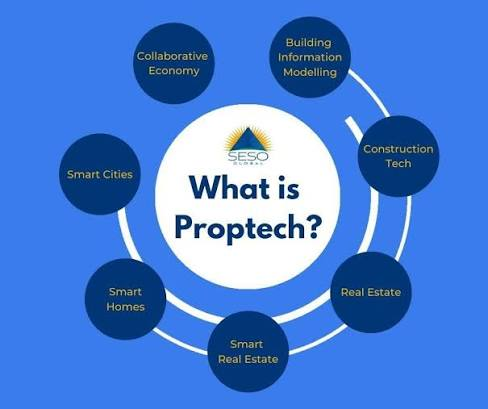
In 2026, waiting for a physical flight is a financial penalty. The Nigerian real estate ecosystem has undergone a “Trust Revolution,” powered by Property Technology (PropTech) and digitized government registries. Today, you can safely acquire, verify, and manage multi-million Naira assets entirely from your laptop in Houston or London. Here are the precise mechanisms making remote buying institutionally secure.
1. Digital Land Titling and the Lagos State Land Portal
The greatest risk of remote buying used to be title forgery. That risk has been systematically dismantled by the digitalization of the Lagos State Land Registry.
Platforms like the Lagos State Land Portal now allow independent legal teams and institutional brokers to verify the authenticity of a Certificate of Occupancy or a Governor’s Consent in under 10 minutes. The digital registry matches the property coordinates to the registered owner in real-time. When Nexora Homes proposes an asset to a Diaspora client, we supply the digital charting coordinates, allowing the client’s independent proxy to digitally verify the state’s exact records without anyone needing to visit a government office.
2. Virtual Transparency: 360° Tours and Drone Topography
“Blind buying” is completely obsolete in 2026. You do not need to rely on static, highly edited photos provided by a developer.
To execute a remote purchase safely, institutional buyers demand Virtual Transparency. At Nexora Homes, we deploy independent drone operators to survey raw land, providing high-definition aerial footage of the topography, perimeter boundaries, and surrounding infrastructure. For completed or off-plan properties, we utilize 4K 360-degree virtual tours. You can digitally walk through the apartment, inspect the ceiling finishing, and check the spatial flow of the kitchen from your living room abroad.
3. Escrow Agreements and Milestone Payments
Even with visual transparency, you must protect the actual transfer of funds. Never wire a 100% upfront payment directly to a developer’s operational account for an off-plan project from abroad.
Safe remote purchasing requires Escrow Services. Your capital is placed in a neutral, third-party escrow account governed by strict legal conditions. The funds are only released to the developer in tranches—typically tied to verifiable construction milestones (e.g., foundation completion, roofing). Nexora Homes coordinates these milestone verifications via live video calls and independent structural engineers before any escrow release is authorized.
4. Technology-Powered Facility Management
The final piece of the remote puzzle is post-purchase management. How do you collect rent and fix plumbing when you live 5,000 miles away?
The 2026 solution is PropTech management platforms.Innovative startups like Dormot provide 24/7 automated property management software.As a remote landlord, you download an app that tracks your tenant’s rent payments in real-time, logs maintenance requests, and provides quarterly financial reporting.
Distance is no longer an excuse. With digital titling, drone surveys, and PropTech management, your capital can work in Lagos while you live globally. Let Nexora Homes execute your remote acquisition flawlessly.
In 2026, that traditional trajectory has fundamentally fractured. Faced with Canada’s restrictive mortgage rates and a severe housing affordability crisis, high-earning Nigerian-Canadians are executing a massive strategic pivot. They are actively redirecting their capital back to Nigeria. In fact, alongside the UK and the US, Canada has emerged as one of the top source markets driving a record ₦850 billion in domestic real estate investments from the Diaspora.
Here is why the Canadian Diaspora is bypassing the local Canadian property market to build real estate empires in Lagos and Abuja.
1. The CAD vs. Naira Currency Arbitrage
The primary driver of this capital flight is pure mathematical arbitrage. The purchasing power of the Canadian Dollar (CAD) against the Naira is historically unprecedented.
A $100,000 CAD savings pool in Ontario might barely cover the down payment on a suburban townhouse, locking the buyer into a 25-year mortgage that consumes 40% of their monthly income. When converted to Naira, that exact same $100,000 CAD transforms into absolute equity. It allows the investor to outright purchase premium, debt-free commercial plots in Epe or a luxury off-plan apartment in Yaba. Canadian investors are trading leveraged debt in a stagnant Western market for unencumbered, high-yield assets in Africa’s fastest-growing megacity.
2. The NRNIA Revolution (Formalizing the Capital Flow)
Historically, the barrier to Diaspora investment was the risk of informal cash transfers. In 2026, the Central Bank of Nigeria revolutionized cross-border wealth management through the Non-Resident Nigerian Investor Account (NRNIA) framework.
Canadian professionals no longer need to wire money through unregulated third parties or rely on family members’ personal bank accounts. They can open specialized NRNIA accounts with tier-one Nigerian banks directly from Toronto or Calgary. This formalizes the investment channel, allowing capital to flow into real estate seamlessly while providing a legitimate, documented financial trail for both rental income and eventual resale proceeds. It satisfies Canadian tax compliance while mitigating foreign exchange exposure.
3. The Death of the “Retirement Home”
Previous generations of the Diaspora bought land in Nigeria strictly to build a massive “retirement home” that sat empty for 11 months of the year.
The 2026 Canadian investor is strictly yield-driven. They are targeting high-performance asset classes. According to current market data, Diaspora capital is heavily flowing into Solar-First Estates in the Ibeju-Lekki and Guzape (Abuja) corridors, aiming for 12% to 18% annual yields, and Build-to-Rent (BTR) models in student hubs targeting 10% to 14% returns. They are buying properties to generate immediate Naira cash flow, which is often reinvested locally to compound their portfolio without requiring additional Canadian capital.
4. The Institutional Proxy
The Canadian Diaspora is exhausted by the “Trust Gap.” They have heard the horror stories of relatives mismanaging funds or buying unverified bush. To deploy capital safely from 5,000 miles away, they now exclusively utilize institutional proxies.
At Nexora Homes, we act as the fiduciary bridge for our Canadian clients. We handle the topographical surveys, process the Governor’s Consent, and manage the facility post-handover. Your location should not limit your portfolio. Contact Nexora Homes to leverage your CAD purchasing power today.